The Best Universal Travel Adapter
An adapter changes the shape of a plug. It does not change voltage, and the number that decides whether it is any use is total watts — which almost nobody prints prominently.
We have not tested this gear. Every figure here is compiled from published manufacturer specifications and published airline policies, and the arithmetic is public so you can check it. This page contains affiliate links — see the affiliate disclosure.
An adapter changes the shape of a plug. It does not change the voltage. Plugging a 110 V-only appliance into 230 V through an adapter destroys it. The number to shop on is total watts: the EPICKA TA-105C publishes 30 W total across six ports, which charges a phone and a tablet at once and will not charge a laptop.
| # | Product | Published weight | Fits | Score | Price |
|---|---|---|---|---|---|
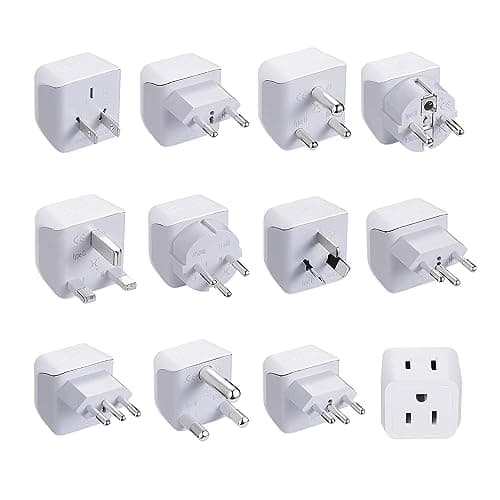
| 1 | Ceptics World Travel Adapter Kit (11-piece)High-draw devices and anyone who wants a grounded connection | 1 lb | 11 of 11AA DL UA WN … | 8.2 | $27.99 · Check on Amazon#ad How we earn |
| 2 | EPICKA TA-105C Universal Travel AdapterPhone, tablet and headphone charging across plug standards | 0.32 lb | 11 of 11AA DL UA WN … | 5.8 | $19.99 · Check on Amazon#ad How we earn |
Prices last verified October 19, 2026. Prices move — the figure you see on Amazon at the moment you click is the real one.
Adapter or converter — get this right first
These are two different products and confusing them destroys equipment.
- A travel adapter changes the physical shape of the plug so it fits a foreign socket. The voltage coming out is whatever the country supplies — 230 V across most of Europe, 120 V in the US.
- A voltage converter actually changes the voltage. It is heavier, more expensive, and almost nobody needs one.
You almost certainly do not need a converter, because almost everything with a charging brick is already dual-voltage. Check the small print on the brick: if it reads 100–240 V, it works everywhere and an adapter is all you need. If it reads 120 V only, an adapter will kill it.
The devices that are still single-voltage are hair dryers, straighteners, some electric shavers and some medical equipment. Everything with a USB cable is fine.
Total watts is the number, and it is usually low
Adapters advertise port counts because port counts sound generous. What matters is the total power the adapter can deliver across all of them at once, and that number is frequently a fraction of what the port count implies.
| Adapter | Published total output | Ports | Weight | Warranty |
|---|---|---|---|---|
| EPICKA TA-105C | 30 W (5 V, 6 A) | 3 USB-C, 2 USB-A, 1 AC | 5.1 oz | 2 yr limited |
| Ceptics World Adapter Kit (11-piece) | Pass-through only | No USB ports | 16 oz | Lifetime limited |
30 W shared across six ports is worth thinking about concretely. A modern phone will draw 20 W or more on its own if you let it. Two devices charging simultaneously will each get roughly half of what they want, and a laptop needing 45 to 65 W will either charge extremely slowly or refuse.
That is not a criticism of one adapter — it is the category. Compact universal adapters are phone-and-tablet devices. If you need to charge a laptop abroad, take the laptop’s own charger and a simple plug adapter for it.
Two ways to solve this, and they are opposites
The all-in-one. One body with sliding pins covering most plug standards, plus USB ports so it doubles as a charger. Light, small, one thing to pack. Ungrounded, limited in current, and it has electronics that can fail.
The plug-adapter kit. A set of individual adapters, each of which does nothing but change the plug shape. Grounded, rated for real current — the Ceptics kit publishes 13 A at up to 250 V — and nothing inside to break, which is why it carries a lifetime warranty. It also weighs a published 16 oz and has no USB ports.
For a value traveler flying a few times a year, the all-in-one is almost always the right answer: it is a third of the weight and it charges things. On a one-bag packing list that difference is real.
What to check before you buy
- Total watts, not port count. Under 20 W is a phone charger. 30 W covers a phone and a tablet. Over 60 W starts to be a laptop.
- USB-C Power Delivery. Without PD, a USB-C port on an adapter charges no faster than USB-A. It is the protocol, not the connector, that carries the speed.
- Fuses, and spares. The EPICKA ships two spare 10 A fuses, which is a manufacturer telling you what fails. That is a useful signal, not a weakness.
- Grounding. Most compact universal adapters are ungrounded. For phone and laptop chargers that is fine; for anything with a metal chassis it is worth the plug-adapter approach instead.
- The countries you actually visit. A universal adapter covers most standards, but South Africa, Italy and Switzerland all use sockets that catch people out.
Where it goes in the bag
With the cables, in the outermost pocket you can reach without opening the main compartment. The adapter is not needed in flight but the power bank and cables are, and keeping the whole electrical kit in one place means one thing to grab if the bag gets gate-checked.
And keep the power bank with the adapter rather than in the case, because spare lithium batteries must travel in the cabin and never in a checked or gate-checked bag.
Every pick, with the working
Each entry below shows the published inputs, the four axis scores they produce, and what you give up. The order is the computed order, not a commercial one.
1 · High-draw devices and anyone who wants a grounded connection
Ceptics World Travel Adapter Kit (11-piece)
Skip this one. Skip it unless you specifically need a grounded, high-current connection. Eleven separate plug adapters weigh a published 16 oz — the heaviest accessory in our ledger — and ten of them are dead weight on any given trip. It has no USB ports at all, so you are still carrying your chargers as well.
Eleven separate grounded plug adapters rather than one universal body — no electronics to fail, a lifetime warranty, and a published 13 A rating a folding adapter cannot match.
- Published size
- 2 × 1.75 × 1.75 in
- Weight
- 1 lb
- Capacity
- Not published
- Weight per liter
- Not published
- Cost per covered year
- Not published
- Published list price
- Not published
Warranty Lifetime limited warranty
Fits 11 of 11 US carriers: AA, DL, UA, WN, AS, B6, F9, G4, HA, MX, SY. See the limits.
What it does well
- Published 13 A at up to 250 V, far above what a folding universal adapter carries
- Grounded, which most compact universal adapters are not
- Lifetime limited warranty on a product with no electronics to fail
What you give up
- 16 oz for the full kit — the heaviest accessory in our ledger
- No USB ports at all: it is a plug adapter, not a charger
- Eleven pieces means ten of them are dead weight on any given trip
The arithmetic behind the score
- Value not scored — No manufacturer-published price, so this axis is not scored.
- Airline-fit breadth 10.0/10 — Fits the published carry-on limit at 11 of 11 US carriers: AA, DL, UA, WN, AS, B6, F9, G4, HA, MX, SY
- Carry efficiency not scored — No published capacity, so weight per liter cannot be computed.
- Warranty & support 6.0/10 — no stated end date (6 of 6); no published repair route (+0); airline damage not covered (+0)
Weights and breakpoints are published on how we rank. Where an input is not published, that axis is dropped and the remaining weights are re-normalized.
Specs: Ceptics published specifications, compiled 3 September 2026. Retail-channel pricing only. Check the live price before buying.
2 · Phone, tablet and headphone charging across plug standards
EPICKA TA-105C Universal Travel Adapter
30 W total across six ports is the number that matters: it is enough for a phone and a tablet at once, and not enough for a laptop.
- Published size
- 2.8 × 2.05 × 1.97 in
- Weight
- 0.32 lb
- Capacity
- Not published
- Weight per liter
- Not published
- Cost per covered year
- Not published
- Published list price
- Not published
Warranty 2 year limited warranty
Fits 11 of 11 US carriers: AA, DL, UA, WN, AS, B6, F9, G4, HA, MX, SY. See the limits.
What it does well
- Published 30 W total output across three USB-C and two USB-A ports plus an AC outlet
- Two spare 10 A fuses in the box, which tells you what fails
- 5.1 oz published, small enough to live in a personal item permanently
What you give up
- An adapter, not a converter — it changes the plug shape, never the voltage
- 30 W shared across six ports is a trickle if you fill them
- 2 year warranty is short for something carrying mains voltage
The arithmetic behind the score
- Value not scored — No manufacturer-published price, so this axis is not scored.
- Airline-fit breadth 10.0/10 — Fits the published carry-on limit at 11 of 11 US carriers: AA, DL, UA, WN, AS, B6, F9, G4, HA, MX, SY
- Carry efficiency not scored — No published capacity, so weight per liter cannot be computed.
- Warranty & support 0.5/10 — 2 yr (0.5 of 6); no published repair route (+0); airline damage not covered (+0)
Weights and breakpoints are published on how we rank. Where an input is not published, that axis is dropped and the remaining weights are re-normalized.
Specs: EPICKA published specifications, compiled 3 September 2026. Retail-only pricing. Check the live price before buying.
Prices last verified October 19, 2026. Prices move — the figure you see on Amazon at the moment you click is the real one.