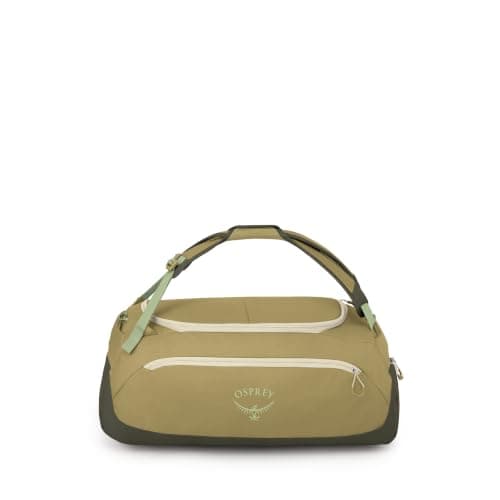
Best carry-on duffel
The Best Carry-On Duffel
Duffels ranked on whether their published dimensions clear a gate sizer, with the honest caveat about soft bags that grow.
Top pick: Osprey Daylite Duffel 45
Soft bags with the best capacity-per-pound figures on the site — and the honest limits of a bag with no structure.
Nothing here has been tested by us. How we rank · Who writes this · How we earn
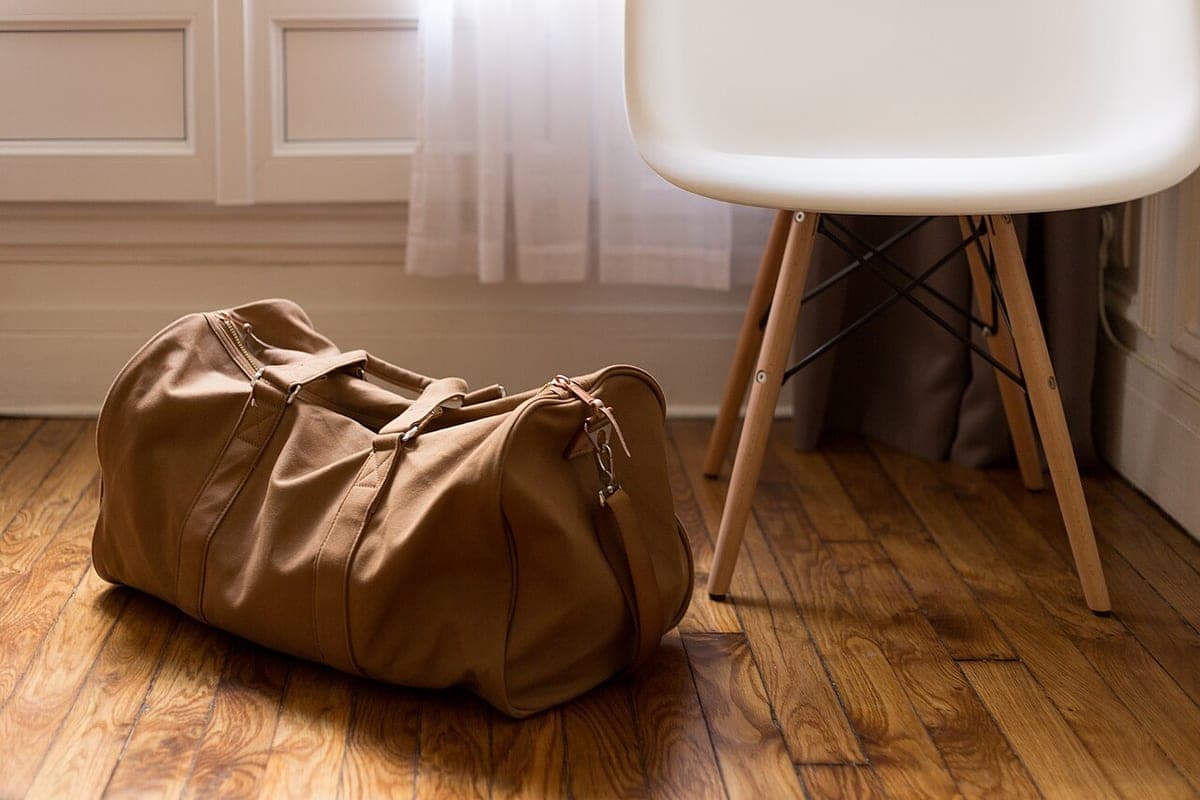
Best carry-on duffel
Duffels ranked on whether their published dimensions clear a gate sizer, with the honest caveat about soft bags that grow.
Top pick: Osprey Daylite Duffel 45
Best international checked pick
Why the binding constraint flips on an international checked bag, and which cases give the most allowance back.
Top pick: Osprey Daylite Duffel 45
Best checked duffel
Duffels judged as checked luggage on published empty weight, payload and linear inches - and the one case where a hard shell wins instead.
Top pick: Osprey Daylite Duffel 45
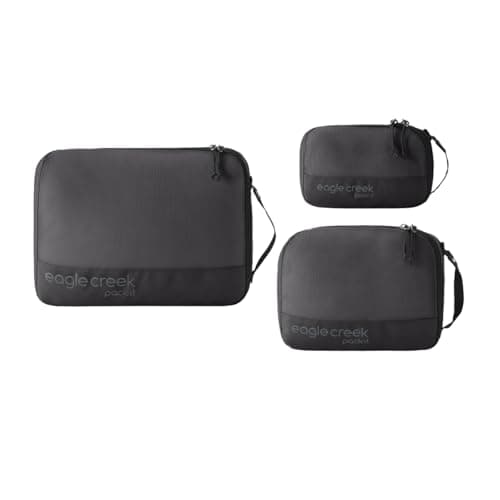
Best garment bag pick
What a garment bag publishes in weight, hanger capacity and folded size, and when packing the suit into a normal carry-on wins.
Top pick: Eagle Creek Pack-It Reveal Packing Cube Set (XS/S/M)
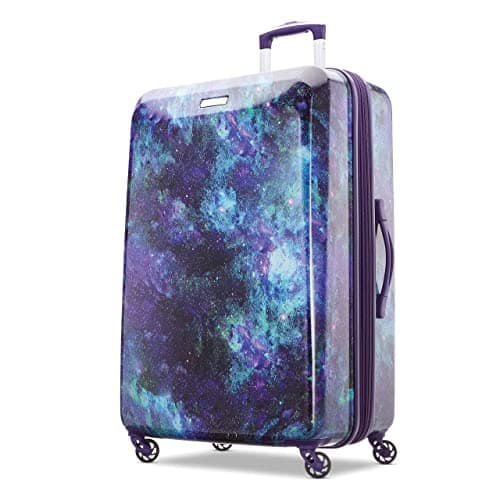
Best hardside checked case
Large hardside checked cases ranked on the 62-inch rule, cost per covered warranty year and published weight.
Top pick: American Tourister Moonlight 28 in Spinner
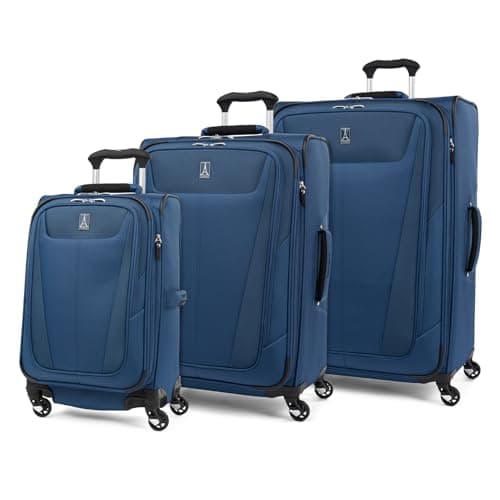
Best luggage set
Luggage sets checked piece by piece against the carry-on box and the 62-inch checked rule, with the warranty and per-piece arithmetic.
Top pick: Travelpro Maxlite 5 3-Piece Set (21/25/29)
Best rolling duffel pick
Wheeled duffels ranked on published weight per liter, and the arithmetic showing what wheels really cost you.
Top pick: Osprey Daylite Duffel 45
Best travel duffel
Duffels ranked on published weight per liter, warranty and fit, including the one that clears the standard carry-on box on all three sides.
Top pick: Osprey Daylite Duffel 45
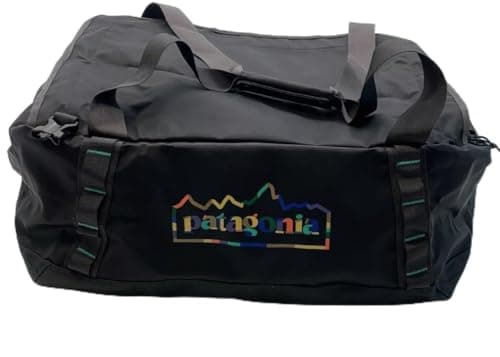
Best weatherproof duffel
Duffels compared on published fabric construction - laminate, coating or plain - with the weight and warranty that come with each.
Top pick: Patagonia Black Hole Duffel 40L
Best checked packing guide
How to pack a bag that will be dropped and stacked, why filling it matters structurally, and the 50 lb arithmetic.
Top pick: Eagle Creek Pack-It Reveal Packing Cube Set (XS/S/M)
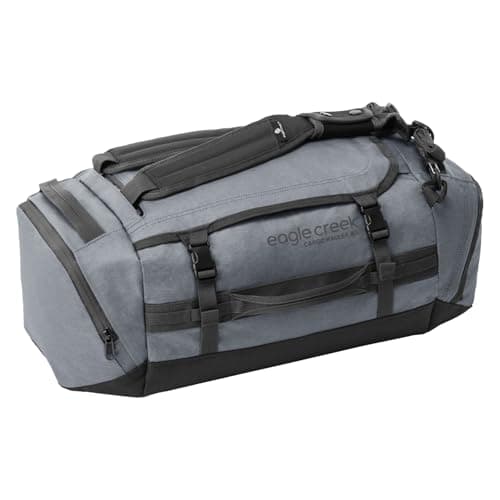
Best checked-bag guide
The 62-linear-inch rule, the 50 lb weight cap, and what each large case costs you before you pack.
Top pick: Eagle Creek Cargo Hauler Duffel 40L
Best format comparison
Duffels and wheeled cases compared on published weight per liter, capacity inside the standard box, and cost per covered year.
Top pick: Osprey Daylite Duffel 45
Best weekender guide
What a two-night bag actually needs to hold, which published capacities fit, and why a shoulder strap is the specification that matters.
Top pick: Osprey Daylite Duffel 45
Best checked-bag protection guide
What protects a checked bag in practice, why warranties do not cover the damage that happens, and how to claim inside the window.
Top pick: Eagle Creek Cargo Hauler Duffel 40L
Best checking-decision guide
The four cases where checking beats carrying, the risks that come with it, and how to make a checked bag behave.
Top pick: Eagle Creek Cargo Hauler Duffel 40L
Lightest per liter
Every duffel in our ledger ranked on published weight per liter of capacity, with the wheeled bags included rather than excused.
Top pick: Osprey Daylite Duffel 45
Black Hole vs Cargo Hauler
The two 40 L duffels compared on published size, weight, fabric and warranty - and the inch and a half of depth that settles it.
Top pick: Eagle Creek Cargo Hauler Duffel 40L
Duffel sizes, in inches
The duffel size ladder from 40 to 110 liters, in published inches, with the carry-on and checked limits each size clears.
Top pick: Osprey Daylite Duffel 45
Cargo Hauler vs Daylite
The only two duffels in our ledger that clear every US carrier's published box, compared on weight, capacity, fabric and cost per covered year.
Top pick: Osprey Daylite Duffel 45
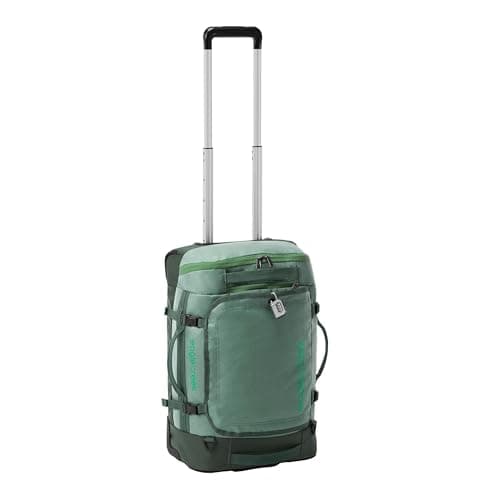
Wheeled duffels, head to head
Two wheeled checked duffels compared on published weight, capacity, linear inches and what each leaves of a 50 lb allowance.
Top pick: Eagle Creek Cargo Hauler Wheeled Duffel 110L
Best 62 linear inch bag
Every large bag we track, added up against the 62 linear inch checked limit - with the four that clear it and the four that do not.
Top pick: Eagle Creek Cargo Hauler Wheeled Duffel 110L
Daylite Duffel 45 verdict
The best-scoring bag on this site, examined honestly - what the $95 buys, and what a frameless duffel gives up.
Top pick: Osprey Daylite Duffel 45
Cargo Hauler 40 verdict
The Cargo Hauler 40 costed against the duffels either side of it, and what a published denier figure is actually worth.
Top pick: Eagle Creek Cargo Hauler Duffel 40L
Best cruise luggage
Cruise line luggage rules, as published, and the bags that clear them - including the one that passes the ship and fails the flight.
Top pick: Eagle Creek Cargo Hauler Wheeled Duffel 110L
Daylite vs Black Hole
Two soft duffels compared on published size, weight, fabric and warranty - and the depth figure that decides which one flies in the cabin.
Top pick: Osprey Daylite Duffel 45
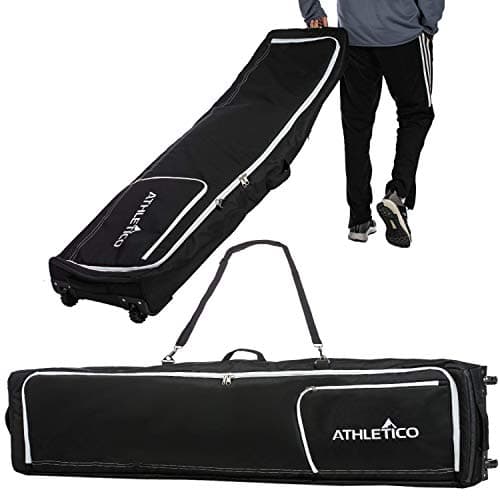
Best ski travel bag
Ski and snowboard travel bags ranked on published padding, published empty weight and the checked-allowance arithmetic that decides between soft and hard.
Top pick: Athletico Rolling Double Ski Bag
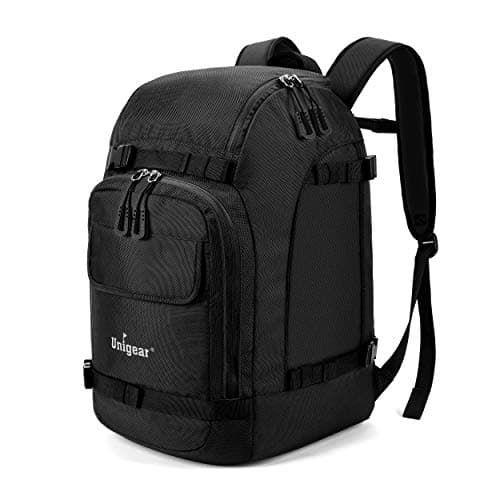
Best ski boot bag
Ski boot bags ranked on published capacity, fabric denier and drainage, with the carry-on question answered against published carrier limits.
Top pick: Unigear 50L Ski Boot Bag Backpack
Best duffel vs pack verdict
Duffels and travel packs compared on published weight per liter, carrier fit and cost per covered year - and the one axis neither number covers.
Top pick: Osprey Daylite Duffel 45
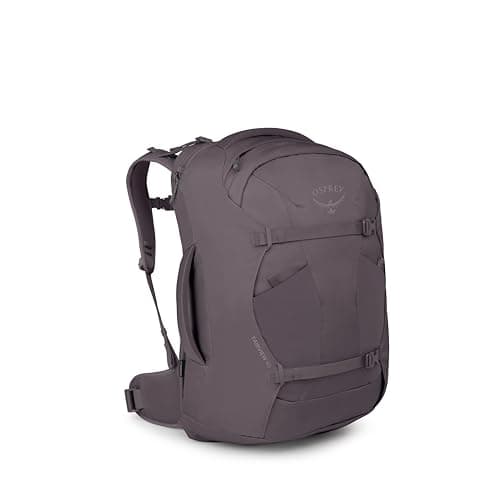
Best carry-on backpack
Travel packs ranked on airline fit first and carry efficiency second — because a pack that gets gate-checked is not a carry-on.
Top pick: Osprey Fairview 40 Travel Pack
Prices last verified October 19, 2026. Prices move — the figure you see on Amazon at the moment you click is the real one.
A duffel is the best capacity-per-pound deal in travel gear and it is not close. The best figure on this entire site belongs to a duffel: 40 L for 2 lb 1 oz, which is 0.05 lb per liter. The lightest hardshell carry-on in the ledger manages 4.43 lb and does not publish a capacity at all.
What you give up is structure, and structure is what a gate sizer measures. A duffel has whatever shape its contents give it, so a bag whose published dimensions clear 22 × 14 × 9 in empty may not clear it full. That is the honest caveat on every recommendation in this section, and it is why the ranking rewards the bags whose published depth leaves margin.
This section is thin on checked luggage on purpose. The whole premise of this site is carry-on-first travel, and a checked bag is a different purchase with a different failure mode: it is handled by people you never meet, so what matters is impact tolerance and whether the warranty covers airline damage — which almost none of them do. One bag in our whole ledger publishes that cover, and it is a carry-on.
If you are checking a bag anyway, the number to look at is the carrier’s linear-inch cap rather than any single dimension: the common US limit is 62 linear inches and 50 lb, and linear inches are measured the same way we measure everything else — wheels and handles included.
Running every bag’s published dimensions against every carrier’s published limit produced something we did not expect: duffels fit better than suitcases. Two of the three duffels we have compiled clear the published carry-on limit at all eleven US carriers. Of the nine wheeled carry-ons in our ledger, exactly one does.
The reason is structural rather than lucky. A wheeled case carries wheel housings below and a handle trolley behind, and both sit outside the packing space but inside the measurement. A duffel has neither, so it measures almost exactly what it holds — which is how 45 L fits inside a box a wheeled case would manage 35 L in.
A duffel is carried rather than rolled, and 40 L of contents on one shoulder across a long concourse is genuinely unpleasant. The published feature that separates a duffel you can live with from one that ruins a shoulder is removable backpack straps.
Two of the three bags here publish them. The third publishes a shoulder strap and the ability to pack into its own end pocket, which is a different and legitimate priority. All three weigh less than half of what the lightest wheeled carry-on in our ledger does, so even carried badly a duffel is a lighter object than the case it replaces.
Rolling duffels show that the wheel penalty is not a constant — one here publishes 4.25 lb for 108 liters. Checked luggage for international travel covers the point where the binding constraint flips from size to weight, and garment bags handle the one shape none of the above can carry.
Only one large hard case in our ledger clears the 62 linear inch rule as published — hardside checked luggage has the arithmetic. Luggage sets are checked piece by piece, and weatherproof duffels are ranked on the published fabric construction, because none publishes a waterproof rating.
One large opening and no internal structure means everything you are not looking at sits underneath everything you are. On a two-day trip that is fine; on a week it is the reason people go back to suitcases.
The fix is cheap, and it is the one case where packing cubes stop being an accessory and become a component: in a duffel, cubes are the internal structure the bag does not have. Two of them — one for clean clothes, one for worn — turn a duffel into something you can live out of.
The lightest duffel per liter produces a result nobody expects: a 108 L wheeled bag beats both 40 L soft ones. And Black Hole against Cargo Hauler settles the two 40 L duffels on an inch and a half of depth.
Three new pages: duffel sizes in published inches, the Cargo Hauler against the Daylite Duffel, and the two wheeled duffels compared, where the bigger bag is the lighter one.
Two verdicts on the bags at the top of this section: the Daylite Duffel 45 is the best-scoring bag on the site and has no structure at all, while the Cargo Hauler 40 sits $54 above it on the strength of a published fabric spec.
Daylite against Black Hole completes that triangle, and it is decided by 1.6 in of published depth.
On the checked side, 62 linear inch luggage adds up every large bag we track and finds most of them already over, and luggage for a cruise is the one place the rule changes shape entirely — Carnival caps two dimensions and ignores length.
Checked sports luggage is its own problem, and the rule that decides it is a weight rule: Delta publishes that your ski or snowboard bag and your boot bag are weighed together against 50 lb. A hard case spends 13.89 lb of that before a ski goes in, which is the whole argument for soft over hard. The boot bags are ranked separately, where the finding is that not one of them clears any published US carry-on box.
The third side of the format triangle. Duffel against travel backpack costs out the straps: at an identical published 40 L the Cargo Hauler is 1.81 lb and the Osprey Farpoint 40 is 3.27 lb, which is 81% more weight for the same volume, and across all six bags compared the duffels average 0.043 lb per liter against the packs’ 0.084. The surprise is the fit column: the worst result belongs to a duffel (1 of 11 carriers) and the best to a pack (11 of 11), so “a duffel is soft, it will fit” is not what the published figures say.