Why Airlines Are Enforcing Carry-On Size
The bag stopped being an operational detail and became a revenue line. That is the whole explanation, and it tells you exactly what to buy.
We have not tested this gear. Every figure here is compiled from published manufacturer specifications and published airline policies, and the arithmetic is public so you can check it. This page contains affiliate links — see the affiliate disclosure.
Carry-on enforcement tightened because the overhead bag became something airlines sell rather than something they absorb. Four of the eleven US carriers we track now charge for it on their cheapest fare, which turns a bag’s dimensions into a revenue question rather than a cabin-management one — and a rule with money behind it gets measured.
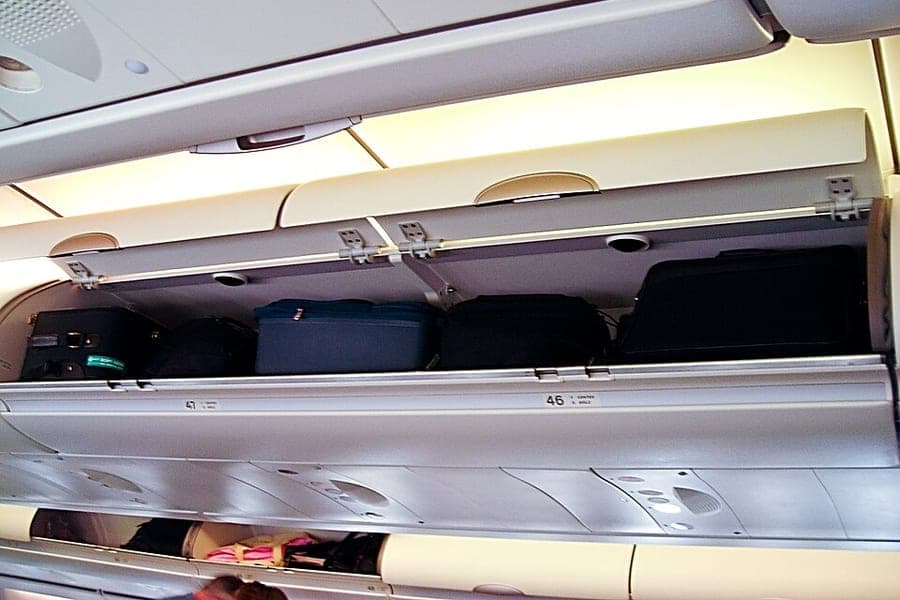
What actually changed
For most of the jet era the carry-on limit existed to manage bin space. It was enforced loosely because enforcing it cost the airline time at the gate and goodwill with the passenger, and gained it nothing. Bins filled, agents gate-checked the overflow for free, everyone moved on.
Unbundling changed the incentive. Once the overhead bag is a product with a price, a passenger carrying an oversize bag past a gate agent is not an operational inconvenience — they are a passenger who has not paid for what they are using. That is a rule an airline has a reason to measure, and it is why the sizer at the gate stopped being decorative.
| Carrier | Published carry-on limit | Included on cheapest fare? |
|---|---|---|
| American, Delta, United, Alaska, JetBlue, Hawaiian | 22 × 14 × 9 in | Yes |
| Southwest | 24 × 16 × 10 in | Yes |
| Frontier | 24 × 16 × 10 in | No — paid extra, and a 35 lb cap |
| Allegiant | 22 × 16 × 10 in | No — paid extra |
| Breeze | 22 × 14 × 9 in | No — bundled into higher fares |
| Sun Country | 24 × 16 × 11 in | No — paid extra, and a 35 lb cap |
The other thing that happened
The US carrier field also got smaller. Spirit Airlines began an orderly wind-down and canceled all flights on 2 May 2026, after two bankruptcies, making it the first major US airline in twenty-five years to fail for financial reasons. Its published carry-on box — 22 × 18 × 10 in — was one of the more permissive in the market, and it is gone.
Fewer carriers means less competitive pressure on ancillary pricing, and the remaining ultra-low-cost operators have no reason to loosen a rule that earns. Practically, it also means most carry-on size tables online are now wrong, because they still list a carrier that stopped flying four months ago. Ours says so explicitly.
What it means for what you buy
The strategic answer has genuinely changed, and it is not “buy a smaller bag”. It is three things:
- Buy for 22 × 14 × 9 in, not for the biggest published box. The generous allowances belong to carriers that either charge for the bag or fly a limited network. A bag sized to Sun Country’s 24 × 16 × 11 in box fails at the majority of US gates.
- Take the personal item seriously. On the four carriers that charge for the overhead bag, the under-seat bag is free and 18 × 14 × 8 in is a real 30 L of usable space. A bag built to that box is the cheapest upgrade in travel.
- Assume the bag gets measured. Which means the published overall dimension matters, not the case dimension, and it means measuring your own bag rather than trusting the listing.
Why this made durability more important, not less
There is a tempting conclusion here — that if the rules keep tightening you should buy cheap and replace often. The arithmetic says the opposite. The bags in our ledger that fit the widest range of published limits are not the cheap ones; they are the ones designed around the 22 × 14 × 9 in box, and they mostly carry longer warranties too.
The cost per covered year across our ledger runs from $4.75 to $34, and the cheapest figures belong to bags with warranties that state no end date rather than to bags with low sticker prices. A bag that fits and lasts a decade is a smaller annual cost than one that fits and lasts three years, even when the second one is half the price. That ranking is here.
Bags built for the tightening standard
Each of these clears the published limit at eight or more of the eleven US carriers we track — which is what buying for the standard box rather than the generous one actually looks like.
Briggs & Riley Baseline Essential Carry-On Expandable Spinner (22 in)
22 × 14 × 9 in · fits 11 of 11 US carriers
Buyers treating a carry-on as a repair contract rather than a purchase
Osprey Fairview 40 Travel Pack
22 × 14 × 9 in · fits 11 of 11 US carriers
Shorter torsos, and anyone the Farpoint's shoulder straps do not suit
Tortuga Travel Backpack Pro 40L
22 × 14 × 8 in · fits 11 of 11 US carriers
Readers who want the tightest published depth in a 40 L bag
Not sold on Amazon#ad How we earnEagle Creek Cargo Hauler Duffel 40L
22 × 12.5 × 9 in · fits 11 of 11 US carriers
A duffel that will actually pass a gate sizer
Full rankings: carry-on luggage · carry-on backpacks · carry-on duffels