Flying With a Car Seat or Harness
There is exactly one FAA-approved harness-type restraint, and it works over a published 22-pound band. Outside that band the decision is made for you.
We have not tested this gear. Every figure here is compiled from published manufacturer specifications and published airline policies, and the arithmetic is public so you can check it. This page contains affiliate links — see the affiliate disclosure.
One FAA-approved harness exists: the CARES system, which AmSafe publishes as certified for children weighing 22 to 44 lb and weighing under 1 lb itself. Below 22 lb the answer is an approved car seat; above 44 lb it is the aircraft seat belt. There is no third option.
This page summarizes published FAA guidance and AmSafe’s published product information. It is not safety advice and it does not override your carrier or the instructions supplied with your own restraint. Sources are linked at the bottom.
| # | Product | Published weight | Fits | Score | Price |
|---|---|---|---|---|---|
| 1 | Eagle Creek Cargo Hauler Duffel 40LA duffel that will actually pass a gate sizer | 1.81 lb | 11 of 11AA DL UA WN … | 8.9 | $149.00 · Check on Amazon#ad How we earn |
| 2 | American Tourister Disney Kids Hardside Upright (18 in)A child old enough to pull their own bag through a terminal | 4.2 lb | 11 of 11AA DL UA WN … | 7.3 | $64.99 · Check on Amazon#ad How we earn |
| 3 | Osprey Daylite Plus 20L BackpackA personal item that is also the daypack for the whole trip | 1.31 lb | 0 carriers | 6.8 | $89.95 · Check on Amazon#ad How we earn |
| 4 | CARES Child Aviation Restraint SystemA child over 22 lb who has their own seat and can sit upright unaided | 1 lb | Not published | 0.0 | Check price on Amazon#ad How we earn |
Prices last verified October 21, 2026. Prices move — the figure you see on Amazon at the moment you click is the real one.
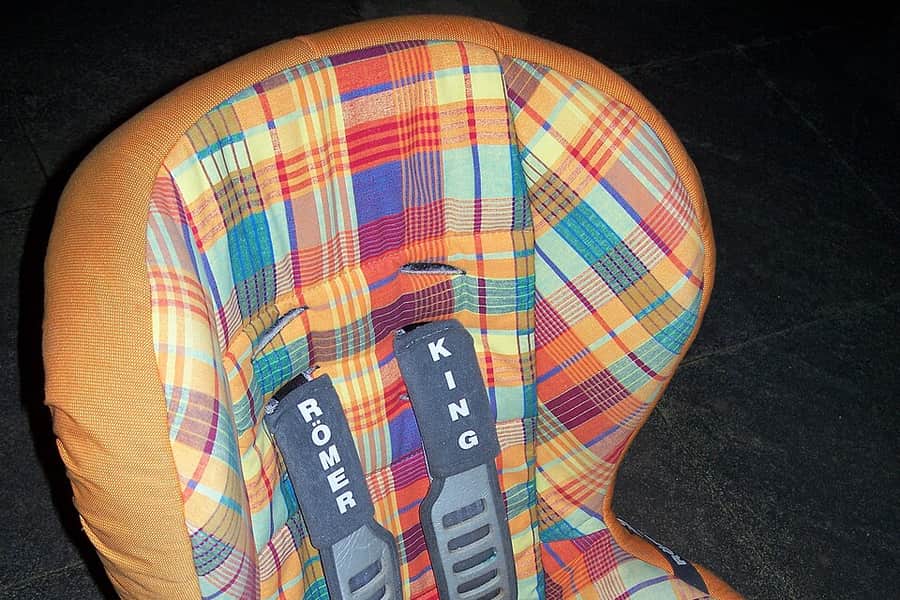
The published weight band decides it
This is the rare travel decision where the rule does most of the work for you. AmSafe publishes CARES as FAA certified for children weighing 22 to 44 pounds — and it is the only harness-type restraint with that approval.
| Child weight | The option | What it weighs you |
|---|---|---|
| Under 22 lb | An approved car seat, or a lap infant | A car seat through the terminal |
| 22 – 44 lb | CARES harness, or a car seat | Under 1 lb, or a car seat |
| Over 44 lb | The aircraft seat belt | Nothing |
The band is narrower than most people expect, and it is worth weighing the child rather than guessing. A child at 20 lb is outside it; a child at 46 lb is outside it in the other direction, and does not need it.
A pound against twenty
Inside the band, the trade is stark. AmSafe publishes CARES at under a pound. A typical convertible car seat is an order of magnitude heavier, and it is not a bag — it is an awkward rigid object with no handle that has to be carried, fitted, and then either used or gate-checked.
For context in the terms this site normally uses: under a pound is less than the lightest empty carry-on we track, and a car seat is heavier than most fully packed ones.
AmSafe also publishes that CARES fits economy, business and first-class seats, and installs quickly — which matters more than it sounds when you are doing it in an aisle with people boarding behind you.
The case for bringing the car seat anyway
The harness is lighter on every axis and it still is not always the right answer, because a harness is an aircraft-only device. It does nothing in the taxi from the airport, the rental car, or the week of driving at the other end.
- You need a car seat at the destination → bring yours, and the question of what to use in the air answers itself.
- Renting a seat with the car → often possible, frequently expensive per day, and you cannot inspect it before you arrive.
- No driving at the destination at all → this is the CARES case, and it is a strong one.
- Child under 22 lb → the decision is made for you.
If the car seat is going in the hold
Most US carriers publish that car seats and strollers are checked free of charge and do not count against your baggage allowance. That is a real and underused entitlement. What it does not do is protect the seat.
- Gate-check rather than checking at the desk where you can. Fewer handling stages, and the seat is usable in the terminal until the door.
- Use a padded car seat bag, not a duffel. A car seat is a rigid shell that takes hold handling badly at the mounting points, and a 600D duffel body is not padding.
- Photograph the seat before you hand it over. Damage claims on checked child restraints are exactly like damage claims on luggage: made at the airport, with evidence, before you leave.
- Retire a seat that took a hard impact. Manufacturers publish this for car crashes and the same logic applies to a seat dropped from a belt loader. If it looks wrong, it is.
The same “take things out first” discipline applies at the door as with any bag. The full gate-check guide.
Lap infants, and what the FAA says
Children under two may generally travel on an adult’s lap without their own seat. It is permitted, it is cheaper, and the FAA’s published position on child safety on aircraft is that the safest place for a child is properly restrained in their own seat.
Both of those are true at once, and the trade-off is yours. What is worth knowing on a gear site is the baggage consequence: a lap infant is generally not a ticketed passenger and generally carries no baggage allowance — which is exactly the trip where you have the most to carry. How to plan around that.
Before you fly
- Weigh the child. The 22 to 44 lb band is the entire decision and guessing is how people arrive with the wrong equipment.
- Check the restraint is approved for aircraft use. Approved car seats carry a label saying so; CARES is the only approved harness.
- Practice the installation at home once. Doing it for the first time in an aisle during boarding is the version everyone regrets.
- Confirm the seat assignment. A restraint generally cannot be used in an exit row, and often not in some aisle positions.
- Tell the airline in advance that you are bringing a restraint. It is usually fine and it is a bad thing to discover at a gate.
Every pick, with the working
Each entry below shows the published inputs, the four axis scores they produce, and what you give up. The order is the computed order, not a commercial one.
1 · A duffel that will actually pass a gate sizer
Eagle Creek Cargo Hauler Duffel 40L
Skip this one. Skip it as a car seat bag. It is an excellent 40 L duffel and it is not a padded car seat cover - a gate-checked car seat takes hold handling, and a 600D duffel body was not designed to protect a rigid plastic shell from it. It is here because it is the bag families reach for, and it is the wrong one.
The only 40 L duffel here whose published dimensions fit the standard 22 × 14 × 9 in carry-on box on all three sides.
- Published size
- 22 × 12.5 × 9 in
- Weight
- 1.81 lb
- Capacity
- 40 L
- Weight per liter
- 0.05 lb/L
- Cost per covered year
- $7.45/yr
- Published list price
- $149
Warranty Limited lifetime warranty
Fits 11 of 11 US carriers: AA, DL, UA, WN, AS, B6, F9, G4, HA, MX, SY. See the limits.
What it does well
- 22 × 12.5 × 9 in clears the standard carry-on box on all three dimensions as published
- 1 lb 13 oz for 40 L, and it packs into its own end pocket
- $7.45 per covered year under a limited lifetime warranty
What you give up
- No wheels and no back panel structure — the straps are a shoulder strap, not a harness
- Ballistic panels are on the base only; the body is 600D
- A soft-sided 40 L bag only holds its published shape when it is not overpacked
The arithmetic behind the score
- Value 8.0/10 — $149 ÷ 20 yr = $7.45/yr; $149 ÷ 40 L = $3.73/L
- Airline-fit breadth 10.0/10 — Fits the published carry-on limit at 11 of 11 US carriers: AA, DL, UA, WN, AS, B6, F9, G4, HA, MX, SY
- Carry efficiency 10.0/10 — 1.81 lb ÷ 40 L = 0.045 lb/L
- Warranty & support 8.0/10 — no stated end date (6 of 6); repair published (+2); airline damage not covered (+0)
Weights and breakpoints are published on how we rank. Where an input is not published, that axis is dropped and the remaining weights are re-normalized.
Specs: Eagle Creek published specifications and price, compiled 3 September 2026.
2 · A child old enough to pull their own bag through a terminal
American Tourister Disney Kids Hardside Upright (18 in)
An 18 in case at a published 4.2 lb with the same 10 year global warranty as the adult range — a child's bag that outlasts the child's interest in it.
- Published size
- 18 × 13 × 9 in
- Weight
- 4.2 lb
- Capacity
- Not published
- Weight per liter
- Not published
- Cost per covered year
- Not published
- Published list price
- Not published
Warranty Limited 10 year global warranty
Fits 11 of 11 US carriers: AA, DL, UA, WN, AS, B6, F9, G4, HA, MX, SY. See the limits.
What it does well
- Same limited 10 year global warranty as the adult American Tourister range
- 18 × 13 × 9 in clears the standard 22 × 14 × 9 in carry-on box on every dimension
- 4.2 lb is light enough for a child to lift into an overhead bin with help
What you give up
- No manufacturer-published price we could read, so value cannot be computed
- No published capacity figure
- Licensed character printing dates faster than the ten year warranty runs
The arithmetic behind the score
- Value not scored — No manufacturer-published price, so this axis is not scored.
- Airline-fit breadth 10.0/10 — Fits the published carry-on limit at 11 of 11 US carriers: AA, DL, UA, WN, AS, B6, F9, G4, HA, MX, SY
- Carry efficiency not scored — No published capacity, so weight per liter cannot be computed.
- Warranty & support 4.0/10 — 10 yr (4 of 6); no published repair route (+0); airline damage not covered (+0)
Weights and breakpoints are published on how we rank. Where an input is not published, that axis is dropped and the remaining weights are re-normalized.
Specs: American Tourister published product specifications, compiled 3 September 2026. American Tourister's own store redirected when checked on 6 September 2026, so no manufacturer price is carried here.
3 · A personal item that is also the daypack for the whole trip
Osprey Daylite Plus 20L Backpack
The only personal-item bag here with a published weight, a published price and a warranty that names no end date — $4 per covered year is the cheapest figure on this site.
- Published size
- 19 × 11 × 9.5 in
- Weight
- 1.31 lb
- Capacity
- 20 L
- Weight per liter
- 0.07 lb/L
- Cost per covered year
- $4/yr
- Published list price
- $80
Warranty All Mighty Guarantee — any reason, any product, any era
Fits No US carrier in our table publishes a limit these dimensions satisfy. See the limits.
What it does well
- $4.00 per covered year is the lowest cost-per-year figure in this ledger
- 1.31 lb for 20 L, and it is the bag you then use every day at the destination
- 19 × 11 × 9.5 in fits the published personal-item box at American, Southwest, Frontier and Allegiant
What you give up
- Over United's published 17 × 10 × 9 in limit on all three dimensions
- 20 L is genuinely small — this is a day bag, not a week's clothes
- No lockable zippers
The arithmetic behind the score
- Value 8.3/10 — $80 ÷ 20 yr = $4/yr; $80 ÷ 20 L = $4/L
- Airline-fit breadth 0.0/10 — Fits the published personal-item limit at 0 of 8 US carriers
- Carry efficiency 9.4/10 — 1.31 lb ÷ 20 L = 0.066 lb/L
- Warranty & support 10.0/10 — no stated end date (6 of 6); repair published (+2); covers airline damage (+2)
Weights and breakpoints are published on how we rank. Where an input is not published, that axis is dropped and the remaining weights are re-normalized.
Specs: Osprey published specifications and price, compiled 3 September 2026.
4 · A child over 22 lb who has their own seat and can sit upright unaided
CARES Child Aviation Restraint System
The only FAA-approved harness-type child restraint, published for 22 to 44 lb, at under a pound — against a car seat that weighs ten times that and has to be carried through the airport.
- Published size
- Not published
- Weight
- 1 lb
- Capacity
- Not published
- Weight per liter
- Not published
- Cost per covered year
- Not published
- Published list price
- Not published
Warranty No warranty term published
Fits No published dimensions to check.
What it does well
- AmSafe publishes it as FAA certified, which no other harness-type restraint is
- Under a pound, against a car seat you otherwise carry through a terminal
- Published to fit economy, business and first-class seats
What you give up
- Published range is 22 to 44 lb — outside that it is the wrong product entirely
- No published warranty term and no published price
- It is an aircraft-only device; it does nothing in the taxi at the other end
The arithmetic behind the score
- Value not scored — No manufacturer-published price, so this axis is not scored.
- Airline-fit breadth not scored — No published dimensions to check against carrier limits.
- Carry efficiency not scored — No published capacity, so weight per liter cannot be computed.
- Warranty & support 0.0/10 — no published term (0 of 6); no published repair route (+0); airline damage not covered (+0)
Weights and breakpoints are published on how we rank. Where an input is not published, that axis is dropped and the remaining weights are re-normalized.
Specs: AmSafe published product information, compiled 3 September 2026. AmSafe publishes no price on its CARES product page. The Value axis is not scored.
Prices last verified October 21, 2026. Prices move — the figure you see on Amazon at the moment you click is the real one.