Sony WH-1000XM5 vs Soundcore Space Q45
The flagship against the budget over-ear, on published figures only. One of these two publishes a price, the other publishes 44 grams less, and the 20-hour battery difference is the specification that changes nothing on a plane.
We have not tested this gear. Every figure here is compiled from published manufacturer specifications and published airline policies, and the arithmetic is public so you can check it. This page contains affiliate links — see the affiliate disclosure.
For flying, weight decides it — and that favors the Sony. Both clear any flight on earth: the WH-1000XM5 publishes 30 h with noise cancelling on, the Space Q45 publishes 50 h. The Sony publishes 251 g against 295 g. The Space Q45 publishes a $149 price; Sony publishes none at all.
Manufacturer-published specifications, compiled 3 September 2026. We have not listened to either of these and no claim below is about sound quality.
| # | Product | Published weight | Fits | Score | Price |
|---|---|---|---|---|---|
| 1 | Sony WH-1000XM5 Noise-Cancelling HeadphonesLong-haul flights where you would rather not carry a charger for the headphones | 0.55 lb | Not published | 0.0 | $198.00 · Check on Amazon#ad How we earn |
| 2 | Soundcore Space Q45 Noise-Cancelling HeadphonesMulti-leg trips where charging the headphones is an annoyance | 0.65 lb | Not published | 0.0 | $99.99 · Check on Amazon#ad How we earn |
Prices last verified October 7, 2026. Prices move — the figure you see on Amazon at the moment you click is the real one.
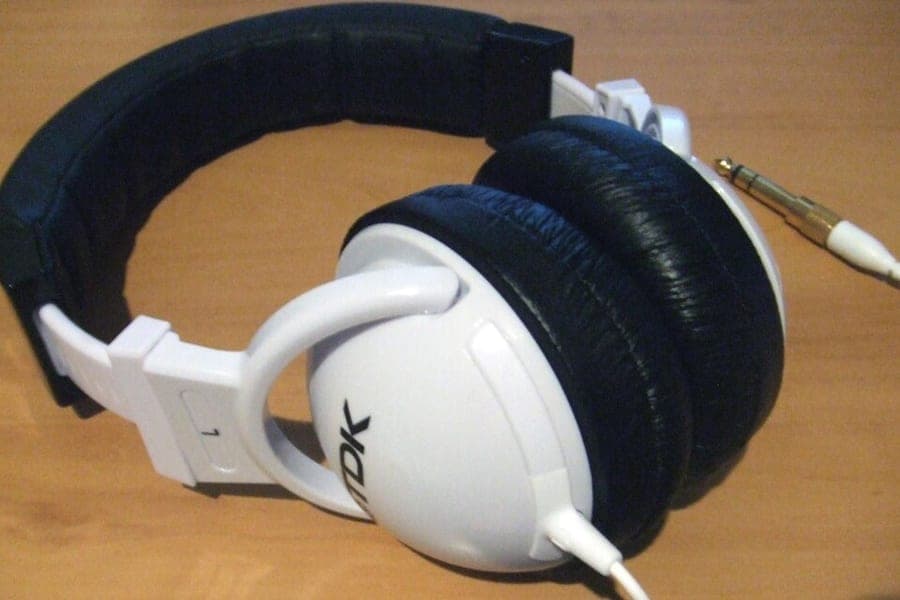
The two, as published
| Sony WH-1000XM5 | Soundcore Space Q45 | |
|---|---|---|
| Published weight | 251 g | 295 g |
| Published battery, noise cancelling ON | up to 30 h | up to 50 h |
| Published driver size | 30 mm | 40 mm |
| Published Bluetooth | 5.2, LDAC | 5.3, LDAC |
| Manufacturer-published price | None published | $149 |
| Published warranty term | None in the specifications we compiled | None in the specifications we compiled |
| Published fast charge | 3 min → 3 h playback (USB-PD) | Not published in the specifications we compiled |
| Packs flat? | Case does not fold flat | Cups pivot and retract |
The 20-hour battery gap is the least useful number here
Anker publishes 50 hours with noise cancelling on, which is the longest figure in our whole ledger and is genuinely impressive. On a plane it is worth almost nothing, and it is worth being precise about why.
The longest scheduled commercial flight in service is under 19 hours. Sony’s published 30 hours already covers that, plus the connection, plus the terminal either side, on one charge. Anker’s extra 20 hours buys you the second leg of a round trip without charging — a real convenience, and a smaller one than the number suggests, because you are near a USB port at both ends.
44 grams, worn for eight hours
44 g is about a sixth of either headphone’s mass and it is carried on the top of your head, not in your bag. Over a long-haul flight that is the difference people actually report noticing, ahead of anything acoustic.
For the bag-weight arithmetic, both are modest: 251 g is 0.553 lb and 295 g is 0.65 lb. Against Hawaiian’s published 25 lb carry-on cap the Sony is 2.2 percent of your allowance and the Anker 2.6. The real cost of an over-ear is volume rather than mass — see below.
The packing problem, where the cheap one wins
Sony’s case does not fold flat. Anker publishes that the Space Q45’s cups pivot and retract, so it packs flatter. In a personal item that is measured against United’s published 17 × 10 × 9 in box, a rigid case that will not flatten competes directly with a laptop for the same flat space.
This is the one practical axis on which the $149 headphone beats the flagship, and it is not a small one if you fly with a laptop and a personal item only.
The price asymmetry, which is the real story
Anker publishes $149. Sony publishes no price at all, which means on this site’s arithmetic the Sony cannot be scored on value — the rule that produces that applies to every product we track and it bites here.
What we can say without a Sony MSRP: the live retail prices for these two are not close, and the gap buys you 44 g less on your head, a fast-charge specification, and a brand-name resale market. It does not buy you a published warranty, because neither maker publishes one.
On 30 mm against 40 mm, and why we are not ranking it
Anker publishes 40 mm drivers against Sony’s 30 mm. It would be easy to treat that as the budget headphone winning a specification, and it would be meaningless. Driver diameter is not a quality measure — tuning, housing and cancellation algorithm matter far more, and none of the three is published as a number by either maker.
Likewise Bluetooth 5.3 against 5.2: both support LDAC, which is the specification that affects what you can stream, and the point revision difference is not audible. We list both figures because they are published and we rank on neither.
What neither of them fixes
Active cancellation is strong against the steady low-frequency engine drone and weak against irregular mid-frequency sound — a baby, a conversation two rows back, a trolley. The irregular sound is what wakes people. Our noise-cancelling headphones page runs that argument in full, and the earplugs page covers the passive side — which is where the irregular noise is actually addressed, at 30 g instead of 251.
If sleeping is the goal rather than listening, the honest recommendation is foam earplugs at under $10, and neither headphone on this page.
Both need the same thing to use the in-flight screen
Neither of these connects to a seat-back entertainment system on its own. That needs a Bluetooth transmitter plugged into the aircraft’s headphone jack — see the adapter page, which publishes the figures for the two we track. It is an easy thing to discover at 35,000 feet rather than before.
The verdict
- Buy the Sony if you fly long-haul and the headphone stays on your head for most of it. 44 g less, and a published 3-minute charge that covers 3 hours.
- Buy the Space Q45 if the budget is the constraint, or if you travel with a laptop in a personal item and need the cups to fold. Anker is also the only one of the two publishing a price, which is the only reason we can score it on value at all.
- Buy neither if the goal is sleep. Both are heavy, bulky objects that solve the wrong half of cabin noise.
Every pick, with the working
Each entry below shows the published inputs, the four axis scores they produce, and what you give up. The order is the computed order, not a commercial one.
1 · Long-haul flights where you would rather not carry a charger for the headphones
Sony WH-1000XM5 Noise-Cancelling Headphones
251 g and a published 30 hours with noise cancelling on — enough for a transatlantic round trip on one charge, which is the only battery figure that matters on a plane.
- Published size
- Not published
- Weight
- 0.55 lb
- Capacity
- Not published
- Weight per liter
- Not published
- Cost per covered year
- Not published
- Published list price
- Not published
Warranty No warranty term published in the specifications we compiled
Fits No published dimensions to check.
What it does well
- 251 g published — the lightest over-ear in this comparison by 44 g
- Up to 30 h with noise cancelling on covers any single flight on earth
- 3 minutes of charge yields 3 hours of playback with a USB-PD adapter
What you give up
- Sony publishes no warranty term in the specification sheet we compiled
- The case does not fold flat, so it takes real volume in a personal item
- No manufacturer-published price
The arithmetic behind the score
- Value not scored — No manufacturer-published price, so this axis is not scored.
- Airline-fit breadth not scored — No published dimensions to check against carrier limits.
- Carry efficiency not scored — No published capacity, so weight per liter cannot be computed.
- Warranty & support 0.0/10 — no published term (0 of 6); no published repair route (+0); airline damage not covered (+0)
Weights and breakpoints are published on how we rank. Where an input is not published, that axis is dropped and the remaining weights are re-normalized.
Specs: Sony published specifications, compiled 3 September 2026. Retail-channel pricing only. Check the live price before buying.
2 · Multi-leg trips where charging the headphones is an annoyance
Soundcore Space Q45 Noise-Cancelling Headphones
Skip this one. Not the answer if bulk is your constraint. Its published 50 hours with noise cancelling on is genuinely the longest figure in our ledger, and it stops mattering the moment you clear a single flight - the Sony's 30 hours already covers any leg on earth. What the Space Q45 charges for it is 295 g, 44 g more than the Sony and the heaviest thing on your head in this ledger. Where it wins outright is that Anker publishes a $149 price and Sony publishes none.
A published 50 hours with noise cancelling on is 20 more than the Sony, which is the difference between charging once a trip and not thinking about it at all.
- Published size
- Not published
- Weight
- 0.65 lb
- Capacity
- Not published
- Weight per liter
- Not published
- Cost per covered year
- Not published
- Published list price
- $149
Warranty No warranty term published in the specifications we compiled
Fits No published dimensions to check.
What it does well
- Up to 50 h with noise cancelling on, published — the longest here by a wide margin
- $149 published price against premium models that publish none
- Cups pivot and retract, so it packs flatter than the Sony
What you give up
- 295 g is 44 g heavier than the Sony
- No published warranty term
- 40 mm drivers and Bluetooth 5.3 are specs, not a sound-quality claim — we have not listened to either
The arithmetic behind the score
- Value not scored — No published warranty term or capacity to divide the price by.
- Airline-fit breadth not scored — No published dimensions to check against carrier limits.
- Carry efficiency not scored — No published capacity, so weight per liter cannot be computed.
- Warranty & support 0.0/10 — no published term (0 of 6); no published repair route (+0); airline damage not covered (+0)
Weights and breakpoints are published on how we rank. Where an input is not published, that axis is dropped and the remaining weights are re-normalized.
Specs: Soundcore published specifications, compiled 3 September 2026.
Prices last verified October 7, 2026. Prices move — the figure you see on Amazon at the moment you click is the real one.