Sony WH-1000XM5 vs WF-1000XM5
Sony's flagship noise cancelling in two shapes. Both publish enough battery for any single flight on earth, which means the decision is really about what you are willing to carry and what you can sleep in.
We have not tested this gear. Every figure here is compiled from published manufacturer specifications and published airline policies, and the arithmetic is public so you can check it. This page contains affiliate links — see the affiliate disclosure.
Both clear any flight, so carry weight decides. The WF-1000XM5 earbuds publish 5.9 g each plus a case of about 39 g — roughly 50.8 g carried — and 8 hours with noise cancelling on. The WH-1000XM5 publishes 251 g and 30 hours. That is a 5× weight difference for battery you will not use.
Sony’s published specifications, compiled 3 and 11 September 2026. Sony publishes the earbud case weight as approximate, so the carried figure is approximate too. We have not listened to either.
| # | Product | Published carried weight | Fits | Score | Price |
|---|---|---|---|---|---|
| 1 | Sony WF-1000XM5 Noise-Cancelling EarbudsTravelers who want noise cancelling without the bulk of an over-ear headphone | 0.11 lb | Not published | 0.0 | Check price on Amazon#ad How we earn |
| 2 | Sony WH-1000XM5 Noise-Cancelling HeadphonesLong-haul flights where you would rather not carry a charger for the headphones | 0.55 lb | Not published | 0.0 | Check price on Amazon#ad How we earn |
| 3 | Soundcore Liberty 4 NC Noise-Cancelling EarbudsLong trips where the charger stays at home | Not published | Not published | 0.0 | Check price on Amazon#ad How we earn |
| 4 | Soundcore Space Q45 Noise-Cancelling HeadphonesMulti-leg trips where charging the headphones is an annoyance | 0.65 lb | Not published | 0.0 | Check price on Amazon#ad How we earn |
No live price is currently verified, so every button here reads Check price on Amazon rather than a number we cannot stand behind. See how we handle prices.
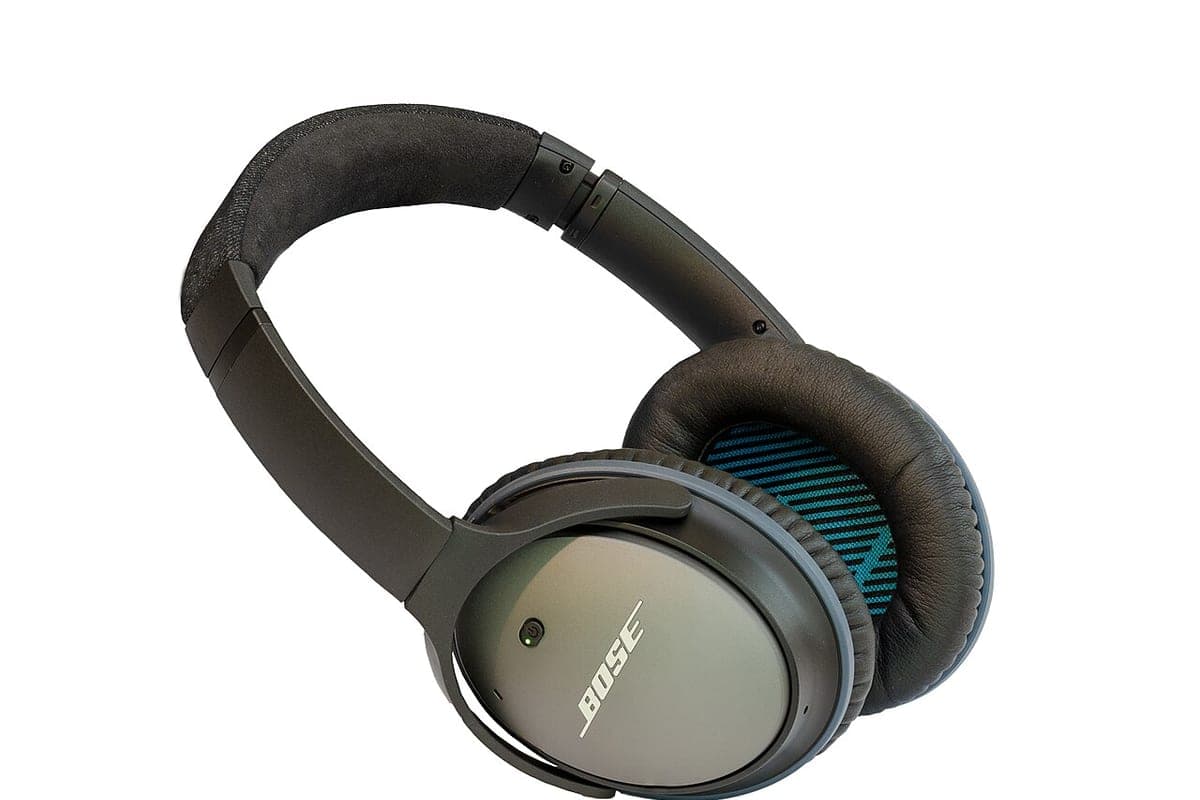
The two, as published
| WF-1000XM5 (earbuds) | WH-1000XM5 (over-ear) | |
|---|---|---|
| Published carried weight | approx. 50.8 g | 251 g |
| Published per-unit weight | 5.9 g per earbud | — |
| Battery, noise cancelling on | 8 hours | 30 hours |
| Battery, noise cancelling off | 12 hours | — |
| Water rating | IPX4 | Not published |
| Sleeping in them | Possible, side sleepers excepted | Not against a window |
| Packed volume | Case does not fold flat | |
| Published price | None published | None published |
The battery gap is real and mostly irrelevant
30 hours against 8 looks decisive until you check it against a flight. The longest scheduled passenger flights in the world run under 20 hours, and almost nobody reading this is on one. A single transatlantic leg is 7 to 9 hours — right at the edge of the earbuds’ published figure, and comfortably inside the over-ear’s.
Two things close that gap. The earbud case recharges the buds in flight, so 8 hours is a per-charge figure rather than a trip figure. And you do not wear noise cancelling for the whole flight anyway — meals, announcements and sleep all interrupt it.
Where 30 hours genuinely wins is a multi-leg day where you never open a bag: an outbound flight, a four-hour layover and a connection on a single charge. What a long layover actually needs.
Five times the weight, and it is not just weight
251 g against roughly 50.8 g is a fivefold difference, and in a personal item the volume matters more than the mass. Sony’s over-ear case does not fold flat, so it occupies a fixed block of a bag that is already competing with a laptop. What actually fits in a personal item.
For a one-bag traveler that is the argument, and it is a strong one: 200 g of saved weight and a pocket instead of a block, for battery you will not run out of. The one-bag list.
What you can actually sleep in
This is where the published specifications stop and honesty has to take over. Over-ear headphones are more comfortable for hours of sitting upright and impossible to sleep in with your head against a window. Earbuds are the reverse: less comfortable over eight hours, and the only one of the two you can lie sideways in — unless you are a side sleeper, in which case neither is pleasant.
If sleep is the actual goal, the cheapest answer in this ledger is neither of them: a 24 dB SNR earplug weighs and packs like nothing, and works on the irregular mid-frequency noise — voices, a crying child — that active cancellation handles least well. The sleep kit, costed.
What noise cancelling does on a plane
Active cancellation is at its best against the steady low-frequency drone of engines and air conditioning, which is exactly the noise that makes a cabin tiring. It is at its worst against sudden, irregular, mid-frequency sound — a conversation two rows back, a dropped tray.
Both Sony models use the same principle, and Sony publishes no comparable figure for the amount of reduction on either, so we will not tell you one is quieter. What we can tell you is that both publish enough battery to keep it on for a flight. How cabin noise cancelling actually works.
Neither plugs into the seat
Both are Bluetooth. In-flight entertainment is a 3.5 mm jack on most aircraft, so if you want to watch the seatback screen through either of these you need a Bluetooth transmitter — a small dongle that plugs into the jack and pairs with the headphones. Bluetooth adapters, compared.
That is an additional object, an additional charge and an additional thing to lose, and it applies equally to both models here.
Neither publishes a price
Sony publishes no US price and no warranty term for either model in the specifications we compiled, so neither can be scored on value on this site. That is a gap worth naming, because the two alternatives here do publish one: the Soundcore Liberty 4 NC at $99.99 and the Space Q45 at $149.
We are not going to tell you a Sony is worth an unpublished premium over a published price. Check both on the day and decide with the numbers in front of you. The earbud field, with prices.
The verdict
- WF-1000XM5 earbuds for one-bag travel, connections, and anyone who might sleep sideways. Roughly 50.8 g carried and IPX4 published. Its con: 8 hours per charge is at the edge of a long-haul leg, and they are small enough to lose under a seat.
- WH-1000XM5 over-ear for long sitting, multi-leg days and anyone who finds earbuds uncomfortable after two hours. 251 g and 30 hours published. Its con: a case that does not fold flat, and no water rating published.
- Neither if the goal is sleep rather than sound. Earplugs publish a 24 dB SNR and weigh nothing.
Every pick, with the working
Each entry below shows the published inputs, the four axis scores they produce, and what you give up. The order is the computed order, not a commercial one.
1 · Travelers who want noise cancelling without the bulk of an over-ear headphone
Sony WF-1000XM5 Noise-Cancelling Earbuds
8 hours published with noise cancelling on covers a transatlantic flight in one charge - the weight recorded here is the buds plus the case, because that is what you carry.
- Published size
- Not published
- Weight
- 0.11 lb
- Capacity
- Not published
- Weight per liter
- Not published
- Cost per covered year
- Not published
- Published list price
- Not published
Warranty No warranty term published in the specifications read
Fits No published dimensions to check.
What it does well
- 8 hours per charge with noise cancelling on, published
- 5.9 g per earbud published - essentially weightless worn
- IPX4 published
What you give up
- No published US price or warranty term in the specifications read
- Sony publishes the case weight as approximate, so the carried weight here is approximate too
- Small enough to lose under a seat, which over-ears are not
The arithmetic behind the score
- Value not scored — No manufacturer-published price, so this axis is not scored.
- Airline-fit breadth not scored — No published dimensions to check against carrier limits.
- Carry efficiency not scored — No published capacity, so weight per liter cannot be computed.
- Warranty & support 0.0/10 — no published term (0 of 6); no published repair route (+0); airline damage not covered (+0)
Weights and breakpoints are published on how we rank. Where an input is not published, that axis is dropped and the remaining weights are re-normalized.
Specs: Sony published specifications, compiled 3 September 2026. No manufacturer-published US price was readable on 11 September 2026.
2 · Long-haul flights where you would rather not carry a charger for the headphones
Sony WH-1000XM5 Noise-Cancelling Headphones
251 g and a published 30 hours with noise cancelling on — enough for a transatlantic round trip on one charge, which is the only battery figure that matters on a plane.
- Published size
- Not published
- Weight
- 0.55 lb
- Capacity
- Not published
- Weight per liter
- Not published
- Cost per covered year
- Not published
- Published list price
- Not published
Warranty No warranty term published in the specifications we compiled
Fits No published dimensions to check.
What it does well
- 251 g published — the lightest over-ear in this comparison by 44 g
- Up to 30 h with noise cancelling on covers any single flight on earth
- 3 minutes of charge yields 3 hours of playback with a USB-PD adapter
What you give up
- Sony publishes no warranty term in the specification sheet we compiled
- The case does not fold flat, so it takes real volume in a personal item
- No manufacturer-published price
The arithmetic behind the score
- Value not scored — No manufacturer-published price, so this axis is not scored.
- Airline-fit breadth not scored — No published dimensions to check against carrier limits.
- Carry efficiency not scored — No published capacity, so weight per liter cannot be computed.
- Warranty & support 0.0/10 — no published term (0 of 6); no published repair route (+0); airline damage not covered (+0)
Weights and breakpoints are published on how we rank. Where an input is not published, that axis is dropped and the remaining weights are re-normalized.
Specs: Sony published specifications, compiled 3 September 2026. Retail-channel pricing only. Check the live price before buying.
3 · Long trips where the charger stays at home
Soundcore Liberty 4 NC Noise-Cancelling Earbuds
40 hours with the case in ANC mode, published, for $99.99 - enough to go out and back on a long-haul trip without finding a socket.
- Published size
- Not published
- Weight
- Not published
- Capacity
- Not published
- Weight per liter
- Not published
- Cost per covered year
- Not published
- Published list price
- $99.99
Warranty No warranty term published on the product page
Fits No published dimensions to check.
What it does well
- 40 hours with the case in ANC mode, published
- $99.99 published
- 5.2 g per earbud and IPX4, published
What you give up
- Case weight not published, so the carried weight cannot be computed
- 98.5% is a marketing reduction figure, not a standard SNR rating
- No warranty term published
The arithmetic behind the score
- Value not scored — No published warranty term or capacity to divide the price by.
- Airline-fit breadth not scored — No published dimensions to check against carrier limits.
- Carry efficiency not scored — No published capacity, so weight per liter cannot be computed.
- Warranty & support 0.0/10 — no published term (0 of 6); no published repair route (+0); airline damage not covered (+0)
Weights and breakpoints are published on how we rank. Where an input is not published, that axis is dropped and the remaining weights are re-normalized.
Specs: Soundcore published specifications and price, compiled 3 September 2026.
4 · Multi-leg trips where charging the headphones is an annoyance
Soundcore Space Q45 Noise-Cancelling Headphones
Skip this one. Not the answer to this page's question. Its published 50 hours with noise cancelling on is the longest here by a wide margin, and that is a figure that stops mattering the moment you clear a single flight — the Sony's 30 hours already covers any leg on earth. What you pay for it is 295 g, 44 g heavier than the Sony over-ear and the heaviest thing in this comparison. If you have decided on over-ear for a plane, you have decided that bulk is the constraint, and this is the bulkiest option.
A published 50 hours with noise cancelling on is 20 more than the Sony, which is the difference between charging once a trip and not thinking about it at all.
- Published size
- Not published
- Weight
- 0.65 lb
- Capacity
- Not published
- Weight per liter
- Not published
- Cost per covered year
- Not published
- Published list price
- $149
Warranty No warranty term published in the specifications we compiled
Fits No published dimensions to check.
What it does well
- Up to 50 h with noise cancelling on, published — the longest here by a wide margin
- $149 published price against premium models that publish none
- Cups pivot and retract, so it packs flatter than the Sony
What you give up
- 295 g is 44 g heavier than the Sony
- No published warranty term
- 40 mm drivers and Bluetooth 5.3 are specs, not a sound-quality claim — we have not listened to either
The arithmetic behind the score
- Value not scored — No published warranty term or capacity to divide the price by.
- Airline-fit breadth not scored — No published dimensions to check against carrier limits.
- Carry efficiency not scored — No published capacity, so weight per liter cannot be computed.
- Warranty & support 0.0/10 — no published term (0 of 6); no published repair route (+0); airline damage not covered (+0)
Weights and breakpoints are published on how we rank. Where an input is not published, that axis is dropped and the remaining weights are re-normalized.
Specs: Soundcore published specifications, compiled 3 September 2026.
No live price is currently verified, so every button here reads Check price on Amazon rather than a number we cannot stand behind. See how we handle prices.